
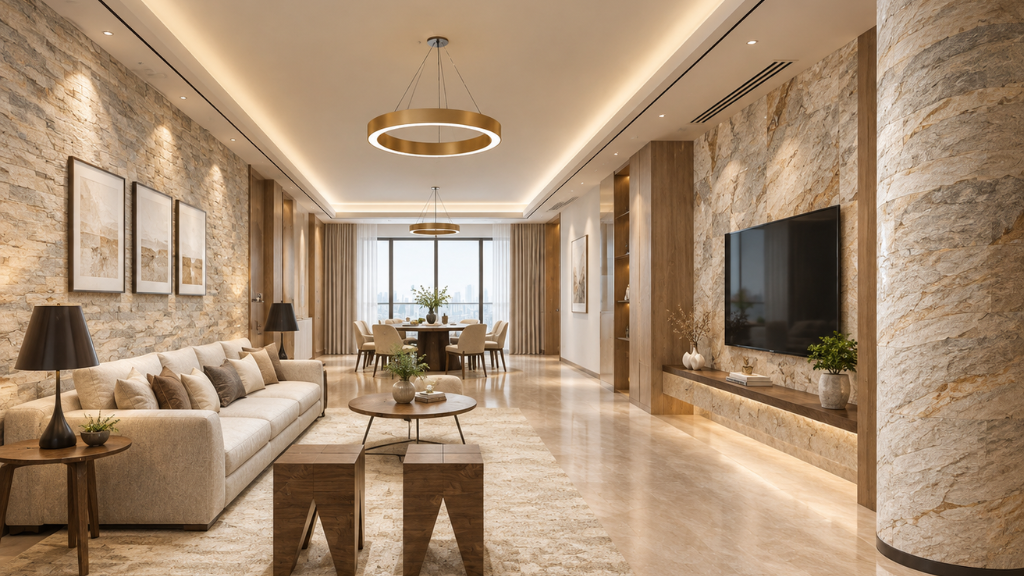
Natural stone is becoming popular in Russian interior design for upscale residences, contemporary workplaces, hotels, and commercial buildings. Designers are searching for adaptable materials that blend natural beauty with useful installation, from sophisticated marble-inspired walls in Moscow to curving columns and unique furnishings in St. Petersburg. An excellent option is flexible natural stone veneer, which gives curving surfaces, ornamental panels, and custom furniture the real texture of stone without the bulk of conventional stone slabs. Finding a trustworthy source of a flexible natural stone veneer supplier in Russia is crucial for architects, builders, and furniture makers to create unique and elegant rooms.
Why Russian Buyers Are Choosing Flexible Stone
Russian homeowners, architects, and fit-out contractors have become more design-driven in the last few years. Clients want interiors that feel premium, warm, and individual, and natural stone remains the strongest symbol of quality. The problem has always been practicality. Solid stone is heavy, hard to transport across a country that spans eleven time zones, and difficult to shape.
Design Trends Driving Demand
Curved architecture is now common in restaurants, hotel lobbies, clinics and showrooms. Round columns, arched niches, wavy reception counters, and rounded staircases all need a surface that follows the form. Flexible stone gives designers the genuine look of travertine, slate, quartzite or sandstone on shapes that were once reserved for paint or plaster.
Weight and Speed
Builders in Russia care about structural load, especially in older apartment blocks and renovated Soviet-era buildings. A thin stone sheet weighs a fraction of a full slab, so it can be fixed to drywall, playwood, or concrete without reinforcing the structure. Lighter material also means easier freight, faster handling on-site, and fewer breakages during transport.
What Makes a Bendable Stone Sheet Different
A conventional stone tile is rigid and cracks when it is forced around a curve. A bendable stone sheet is built differently, and understanding the construction helps you judge quality before you order.
How the Material Is Made
A micro-thin layer of real stone is sliced from a block and bonded to a flexible backing such as fabric, fibreglass, or a polymer film. The stone keeps its natural colour, veining and texture, while the backing holds everything together and gives the sheet its elasticity. Because every sheet comes from a real block, no two pieces are exactly alike, which is exactly what premium clients want.
Key Performance Properties
Good sheets are lightweight, easy to cut with a utility knife or fine saw, and resistant to moisture when sealed correctly. They can wrap a column with a modest radius, follow a wave pattern or cover a flat wall with the same adhesive. For Russian winters, check that the product is rated for stable use in heated interiors and for the temperature swings that happen in entrance halls and covered terraces.
Curved Walls and Columns in Russian Interiors
The most visible use of flexible stone is architectural. Designers use it to turn plain structural elements into focal points without major construction work.
Curved Walls and Arches
Restaurants and hotels in major cities often use rounded feature walls behind bars, in lobbies and at spa entrances. A thin stone surface follows the curve in one continuous run, so there are fewer visible joints and a more seamless result. Arched doorways and niches in private homes also benefit, because the material can be trimmed to fit tight radii.
Columns and Facades
Round columns are common in shopping centres, banks and business lobbies. Wrapping them in real stone adds depth and prestige without the bulk of solid cladding. In exterior projects such as entrance portals and garden walls, weather-rated sheets add natural texture while keeping the load on the structure low. Always confirm the exterior rating with your supplier before specifying the product outdoors.
Stone Boards for Furniture Veneer: Tables, Cabinets and Vanities
Furniture makers in Russia are quickly adopting thin stone because it brings luxury to pieces that would be too heavy in solid stone. Using stone boards for furniture veneer lets a workshop deliver a coffee table, wardrobe door or kitchen island with a real stone surface that can still be lifted by two people.
Popular Furniture Applications
Common projects include dining and coffee tables, TV units, bedside tables, headboards, bathroom vanities, countertop fronts and decorative wall panels. Designers like the material for custom pieces because it can be applied to MDF, plywood, aluminium honeycomb and curved bases. Rounded sideboards and fluted cabinet fronts are especially popular with clients who want a boutique, one-of-a-kind look.
Why Workshops Prefer It
Cabinet makers can cut, shape and bond the veneer with standard workshop tools, so they do not need specialist stone machinery. Lead times are shorter, waste is lower and the finished item ships more easily to customers in distant regions. For manufacturers selling online across Russia, lighter pieces are also easier to deliver.
Choosing a Marble Sheet Supplier in Russia
Stone is a visual product, so the supplier you choose directly affects the final result. Russian buyers tend to compare several vendors before ordering, and a few checks make the decision easier.
Quality, Colour, and Consistency
Ask for physical samples and a clear range of finishes. Check the thickness of the stone layer, the quality of the backing, and how well the edges hold when cut. Request batch consistency details, because a large project is easier to finish when every sheet comes from the same production run.
Documentation, Logistics, and Support
Reliable partners communicate clearly, quote realistic delivery windows, and provide technical data sheets. They also help with customs paperwork and packaging for long-distance transport. A trusted export partner such as Earthstone Global can supply samples, technical guidance and consistent batches for designers, contractors and furniture makers working on projects of every size.
How to Install a Bendable Stone Sheet Step by Step
Installation is simpler than traditional stone, but preparation still decides the quality of the result. Follow this simple process and your finish will look professional and stay durable.
- Prepare the surface so it is clean, dry, flat and free from dust or old paint.
- Test-fit the sheet and plan the seams so patterns and veining flow naturally.
- Cut the sheet with a sharp blade or fine-tooth saw, and always cut from the stone side for a clean edge.
- Apply a suitable flexible adhesive evenly with a notched trowel.
- Press the sheet firmly, working from the centre outward to remove air bubbles.
- Wipe away excess adhesive immediately and let it cure fully.
- Seal the surface with a stone sealer, especially in kitchens, bathrooms and humid areas.
Climate, Logistics and Practical Planning for Russian Projects
Russia’s climate and size shape every purchasing decision. Heated interiors with dry winter air, humid bathrooms and long transport routes all affect product choice. A thin, lightweight sheet is an advantage on long deliveries to cities such as Novosibirsk, Yekaterinburg or Kazan, because it reduces freight volume and breakage risk.
Plan your order with a small buffer for trimming and pattern matching, and store sheets flat and dry on site before installation. If your project needs a dependable marble sheet supplier in Russia, discuss lead times and delivery routes early, so material arrives before your installers begin. Working with Earthstone Global early in the design stage also helps you match finishes to your design brief before final specifications are locked.
Conclusion
Thin, light and genuinely natural, stone veneer has opened up shapes that once needed heavy slabs or imitation finishes. For curved walls, columns and custom furniture, it offers a premium look with practical handling. If you are ready to move from inspiration to a real order, choose a flexible natural stone veneer supplier in Russia that offers samples, clear documentation and consistent quality, and consider Earthstone Global as your starting point.
Frequently Asked Questions
1. What is flexible natural stone veneer?
It is a thin layer of real stone bonded to a flexible backing so it can bend around curves while keeping its natural look.
2. Can flexible stone be used on curved walls and columns?
Yes, it wraps around rounded walls, arches and columns with a suitable adhesive and proper surface preparation.
3. Is flexible stone veneer suitable for furniture?
Yes, it can be bonded to MDF, plywood or honeycomb panels to create tables, cabinets, vanities and wall panels.
4. Can it be used outdoors in Russian weather?
Only weather-rated sheets should be used outside, so confirm the exterior rating with your supplier first.
5. How do I cut and install flexible stone veneer?
Cut it with a sharp blade or fine saw, then fix it to a clean, flat surface using a flexible adhesive and seal the finish.