
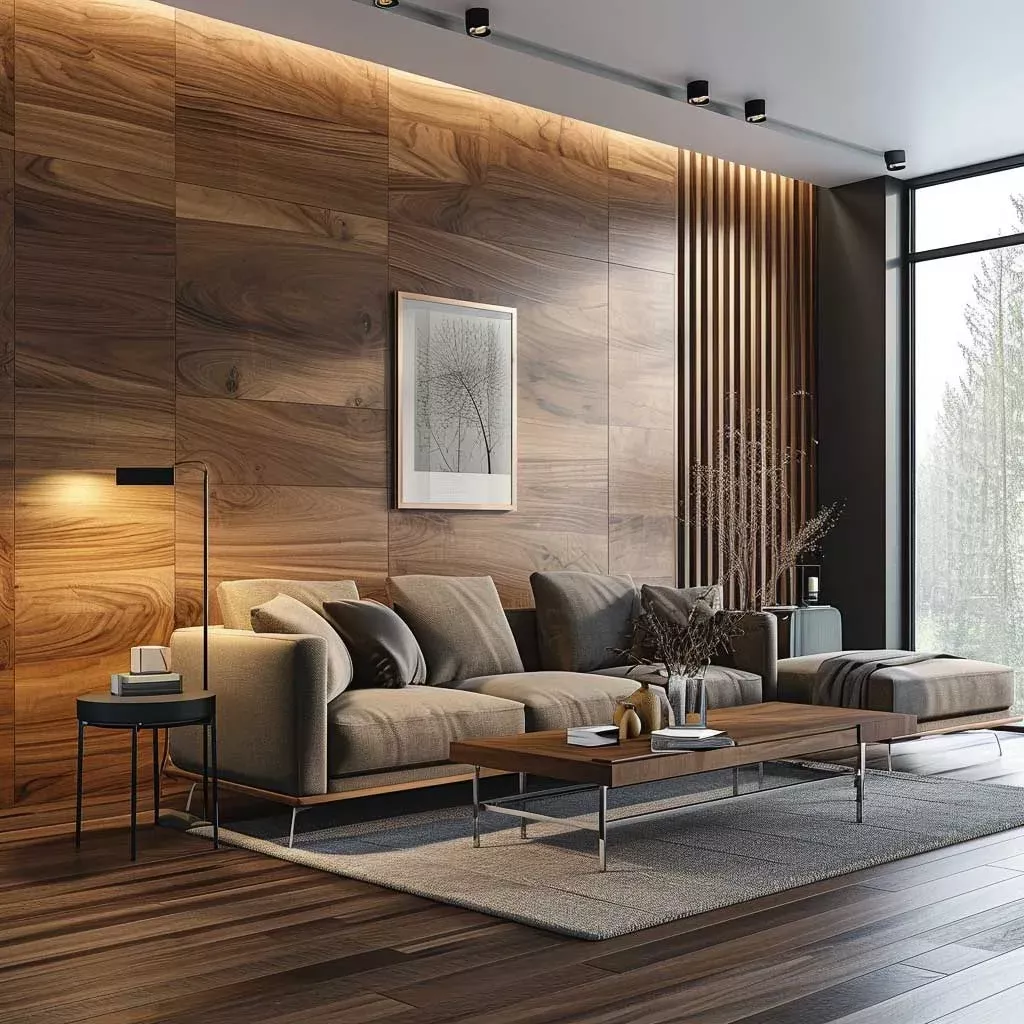
The materials that define a luxury interior are the ones that stop people mid-step. A surface that carries real texture. A wall that makes you want to reach out and touch it. A ceiling detail that changes the quality of light in an entire room. Wood has always done this. But solid timber at scale is heavy, expensive to install, structurally demanding, and simply not practical for the curved walls, tight profiles, and lightweight ceiling systems that define contemporary luxury design in the United States. This is where the range of flexi wood applications has opened up new creative territory for architects, interior designers, and luxury space owners who want the warmth of real wood without the limitations of traditional timber construction.
Flexi wood is a flexible, lightweight wood-like surface material that replicates the natural look and texture of genuine timber while offering a performance profile that solid wood cannot match. It bends to curved substrates, adheres to complex architectural forms, installs without structural reinforcement, and arrives in a color range spanning warm walnut, deep wenge, honey amber, and clean white that covers every direction in contemporary luxury design. The result is a material that has moved from niche application into serious use across luxury residences, boutique hotels, premium retail, and executive commercial interiors across the country.
Why Flexi Wood Is Redefining Luxury Interior Wood Panels in the USA
The Weight and Structural Problem That Traditional Wood Creates
Solid hardwood paneling on a feature wall in a Manhattan penthouse or a Beverly Hills residence carries significant structural implications. Wall substrates must be reinforced to bear the load. Installation requires specialist carpentry. Any curved wall section demands custom millwork that adds both cost and lead time. For high-rise residential or hospitality projects where structural modifications are restricted or prohibitively expensive, these constraints frequently rule traditional wood paneling out entirely.
Flexible wood veneer changes this equation completely. At a fraction of the weight of conventional timber panels, it can be adhered directly to existing plasterboard, MDF, or even curved plywood forms using construction adhesive with no additional structural support. A 400-square-foot feature wall that would have required days of skilled installation and significant structural preparation can be completed in a single day by a two-person team. This is not just a convenience. It is a fundamental expansion of where and how wood can be used in luxury spaces.
Design Range: From Boardroom Restraint to Warm Residential Luxury
The color and texture range available in quality flexiwood products spans the full breadth of luxury interior design directions. Warm timber tones, including honey, chestnut, and light walnut, suit the Californian contemporary residential aesthetic, where natural warmth and organic materiality are central to the brief. Deep wengue, reddish wengue, and iroko suit the darker, more dramatic direction favored in New York hospitality and high-end retail fit-outs.
Cooler options, including light grey and white flexi-wood, address the Scandinavian-influenced and biophilic design directions that have become prominent in luxury wellness spaces, boutique hotel rooms, and executive office interiors. A single material category covers the full design range, which simplifies specification while maintaining the visual authenticity that luxury interior wood panels require to read as premium in any context.
Sustainability Credentials That Matter to Today’s Luxury Buyer
The American luxury interiors market has shifted meaningfully toward sustainable material choices over the past five years. High-net-worth homeowners, institutional hospitality brands, and LEED-certified commercial developments all increasingly require their design teams to specify materials with verifiable environmental credentials. Solid tropical hardwood carries significant sustainability concerns, particularly around deforestation and carbon-intensive production.
Flexi wood, designed as an eco-friendly alternative that delivers real wood aesthetics without the resource intensity of conventional timber harvesting, fits comfortably into this sustainability framework. For interior designers building specification cases for LEED-pursuing commercial projects or clients with stated sustainability commitments, this is a meaningful differentiator that solid wood panels cannot match.
Flexi Wood Applications in Luxury Residential Interiors
Feature Walls That Define the Entire Room
The feature wall behind a sofa, a bedhead, or a dining table is the single most impactful surface in a residential interior. It anchors the room’s character and sets the tone for every other material decision. Flexiwood applications on feature walls deliver what paint, wallpaper, and even natural stone cannot: genuine wood grain, natural color variation within the sheet, and a tactile surface that reads as warm and grounded in every lighting condition from natural daylight to evening candlelight.
In a Malibu coastal residence, a light walnut flexi wood feature wall behind a linen sectional creates the organic, beach house luxury that the market demands without the humidity-related warping risk that solid timber faces in oceanside environments. In a Chicago penthouse, a floor-to-ceiling wengue wall panel in a deep bedroom creates the dramatic, cocoon-like quality that luxury hotel suites achieve at great expense. The flexibility to specify exactly the right color and texture for the specific design direction of the space is one of the clearest advantages of this material category.
Curved Ceilings, Architectural Niches, and Custom Millwork Alternatives
Contemporary luxury residential design has moved definitively away from flat, unadorned surfaces toward architectural ceiling details, barrel-vaulted corridors, curved wall niches, and organic form furniture that conventional flat panels cannot address. Flexible wood veneer sheets bend directly to any radius a substrate presents, allowing wood surfaces to follow curved ceilings, wrap column bases, fill arched openings, and cover the surfaces of custom furniture forms in a single material with no visible joints.
A curved home office built-in with flexi-wood surfaces reads as bespoke millwork at a fraction of the custom fabrication cost. A barrel vault entry corridor clad in honey-finish flexi wood creates the feeling of a private members’ club in a residential setting. These are applications where the flexibility of the material is not just a practical advantage but a design enabler that opens up architectural possibilities that were previously only available at extremely high price points.
Bathroom and Spa Spaces Where Warmth Meets Practicality
The master bathroom has become the most aspirational room in American luxury residential design. Heated floors, freestanding tubs, steam showers, and natural materials are all part of a brief that increasingly references private spa experiences. Wood surfaces have always been desired in this context but avoided because of their vulnerability to moisture.
Flexiwood, properly sealed, performs in humidity-adjacent applications, including bathroom accent walls, ceiling panels in steam-free zones, and sauna-adjacent changing areas, in a way that solid timber cannot. The light chestnut and white finish options are particularly popular in premium spa and bathroom contexts, where the material’s warmth softens the clinical feeling that stone and tile can create when used across every surface.
Installation: What Makes Flexi Wood Practical for Luxury Project Timelines
One of the most consistent advantages that flexible wood veneer sheets deliver on luxury projects is installation efficiency. Unlike solid timber, which requires skilled carpentry and extended on-site fabrication, flexiwood adheres to prepared substrates with standard construction adhesive. Sheets can be cut to size using a sharp utility knife, applied by a single installer, and trimmed to perfect edges without specialist tools.
For a luxury project where client handover timelines are fixed and installation disruption must be minimized, this efficiency is genuinely valuable. A 200-square-foot feature wall installation that might take two days of skilled carpenter time in solid timber can be completed in four to five hours with flexible wood panels. On a high-value project where the daily cost of delayed completion is significant, the time saving has direct financial value beyond its convenience.
Working With a Supplier Who Understands Luxury Project Requirements
The quality of the flexi wood you specify determines the quality of the finished result. Material consistency between sheets, accurate colour matching across a large order, and appropriate technical documentation for fire rating and VOC compliance are all essential for luxury commercial projects and important for premium residential ones.
Brands like Earth Stone Global bring over natural surface manufacturing expertise to their Flexi Wood range, producing flexible wood surface solutions that deliver the authentic grain, consistent color, and performance reliability that luxury project specifications require. Their product ships to the USA and is available in the full color range across standard sheet sizes.
Conclusion
The range of flexi wood applications available to American luxury interior designers, architects, and homeowners has expanded the creative possibilities for wood surfaces in ways that the limitations of solid timber never permitted. Feature walls that follow curves. Ceilings that carry warm timber finishes without load restrictions. Furniture surfaces in the same material language as the room’s architecture. Hospitality and retail environments where wood warmth creates the sensory experience that luxury demands.
For design professionals and luxury space owners looking for a premium flexible wood surface solution that delivers authentic grain, a colour range spanning every luxury interior direction, and installation efficiency that works with demanding project timelines, Earth Stone Global offers a proven modern luxury interiors material that is being specified across the USA’s most discerning residential and commercial projects. Explore the Flexi Wood range and request samples at earthstoneglobal.com.
Frequently Asked Questions (FAQs)
1. What are the most popular flexi wood applications in luxury residential interiors?
Feature walls, ceilings, fireplace surrounds, and bathroom accent walls are the most common applications.
2. Can flexible wood veneer sheets be used on curved surfaces in commercial spaces?
Yes, they are ideal for curved surfaces like columns, reception desks, and arches.
3. How do luxury interior wood panels compare to solid timber in cost and installation?
They are more cost-effective and faster to install than solid timber.
4. What finish options are available for modern luxury interiors in flexi wood?
Popular finishes include walnut, chestnut, maple, wengue, grey, and white tones.
5. Is flexiwood suitable for hospitality and commercial applications in the USA?
Yes, it can meet commercial fire compliance requirements when properly specified.