
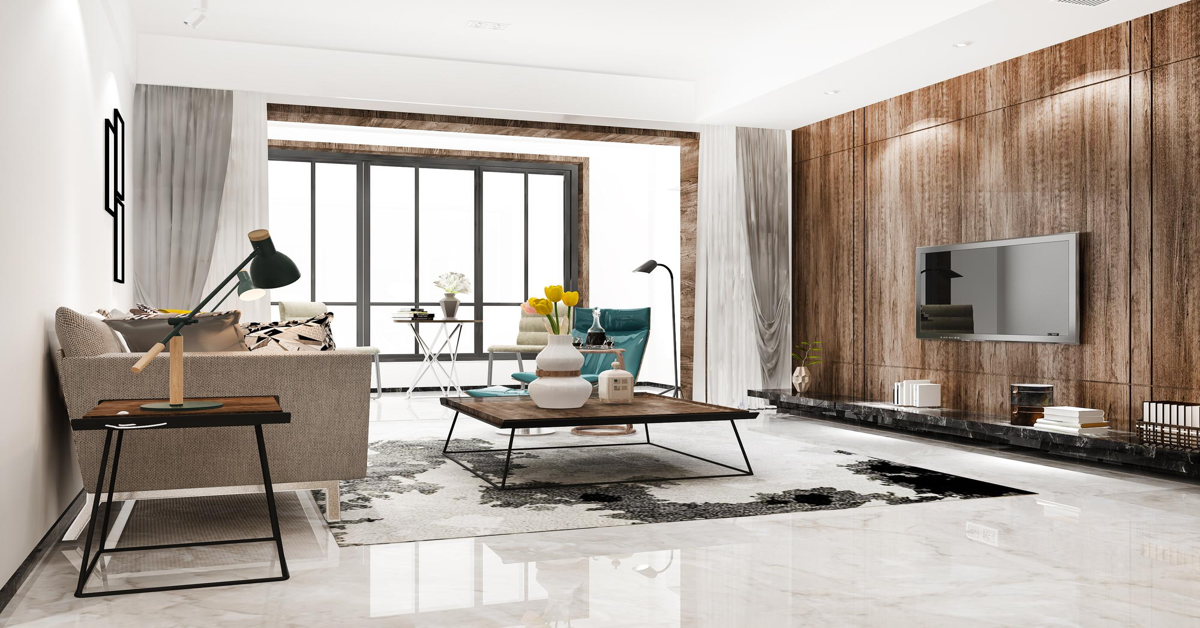
There is a quiet revolution happening on the walls and floors of American homes, hotels, offices, and retail stores. Modern slim tiles are showing up everywhere, and once you understand what they actually offer compared to traditional materials, it becomes obvious why. These ultra-thin panels, typically ranging from 2mm to 6mm in thickness, pack the visual appeal of natural stone or premium porcelain into a format that is lighter, faster to install, and significantly more versatile than anything the market offered a decade ago.
For homeowners planning a kitchen backsplash renovation, architects specifying a hotel lobby surface, or commercial property owners looking to refresh a retail space without shutting down for weeks, modern slim tiles change the math on almost every factor that matters: cost, time, design range, and long-term maintenance. This article covers all of it, with a focus on how these materials are being used across the USA and why they have become one of the fastest-growing categories in the building materials industry.
What Are Modern Slim Tiles?
Slim tiles are thin-profile surface panels produced at a fraction of the thickness of conventional tiles. Where a standard ceramic floor tile might be 10mm to 12mm thick, a slim tile panel sits at 3mm to 6mm, making it dramatically lighter and easier to handle. They are made using one of two primary approaches: high-pressure sintering of ceramic or porcelain compounds or bonding an ultra-thin slice of natural stone to a fibreglass, polymer, or clay backing.
The result is a panel that looks and feels like the real thing, whether that real thing is marble, slate, travertine, or concrete, but behaves very differently during installation and throughout its working life. It can be cut with standard tools, applied directly over existing surfaces in many cases, and handled by smaller installation crews without specialist equipment. For the American construction market, where both labor costs and renovation timelines directly affect project viability, these characteristics are genuinely significant.
Why the American Market Is Embracing Slim Tiles
The US construction and renovation market is one of the most demanding in the world when it comes to timeline expectations, cost sensitivity, and design standards. Homeowners in cities like New York, Los Angeles, Chicago, and Miami expect renovation projects to move quickly and look exceptional. Architects and commercial developers operate on tight project schedules where material installation time directly affects handover dates and revenue.
This is precisely the environment where modern slim tiles thrive. The combination of premium aesthetics, fast installation, and overlay capability, meaning new tiles applied over old ones without demolition, addresses the three most common pain points. American property owners describe three things when talking about renovation projects: cost, disruption, and design limitation.
The US green building movement adds another dimension. Slim tiles use less raw material per square foot of coverage than conventional tiles, which reduces the environmental footprint of a project. LEED-certified projects and buildings pursuing sustainability credentials are increasingly specifying slim tile surfaces for this reason as well.
Slim Tiles for Walls: Where They Shine
Wall applications are where slim tiles have made the clearest impact in the American residential and commercial market. Slim tiles for walls solve a practical problem that has always limited interior design ambition: the weight and thickness of traditional wall cladding materials.
Residential Kitchens and Bathrooms
American homeowners invest an average of $25,000 to $50,000 in full kitchen renovations, according to recent Houzz data. Wall surfaces account for a meaningful share of that budget. Slim tile panels on kitchen backsplashes and bathroom feature walls deliver high-end results at lower material and labour costs than full stone cladding. They can be applied directly over existing tile in most cases, which alone eliminates a significant demolition and disposal expense.
The range of surface finishes available in slim tiles for walls today is extraordinary. Marble-effect panels with realistic veining, textured slate looks, smooth concrete finishes, and warm travertine surfaces are all achievable. A homeowner in Denver can select a Carrara marble look for their master bath at a fraction of the cost of actual marble installation, and the maintenance requirements are far lower, too.
Hotel and Hospitality Interiors
Hotel properties in the USA operate on tight refurbishment cycles, often updating guest rooms and public areas every five to seven years to maintain brand standards. Slim tile wall panels have become a preferred specification for hotel designers for a simple reason: they allow a complete wall surface transformation without the structural implications of traditional stone cladding.
A 200-room hotel refurbishment that specifies slim tile wall panels in bathrooms and corridor feature walls can complete the work in phases without closing the property entirely. The installation speed, combined with the ability to go directly over existing tile, makes it possible to refurbish a floor of rooms over a weekend, a timeline that would be impossible with conventional materials.
Slim Tiles for Flooring: A Different Kind of Upgrade
Floor applications for slim tiles are more specific than wall applications because floors carry loads and foot traffic that walls do not. That said, slim tiles for flooring have a genuine and growing presence in the American market, particularly in renovation contexts where raising the floor level is not possible.
- Low-profile renovation advantage: In existing buildings where door clearances, stair heights, and transition thresholds are fixed, slim floor tiles allow a surface update without the height increase that thicker tiles would create. This is particularly valuable in apartment renovations and commercial refits.
- Overlay installation: Stable existing floor surfaces can often accept slim tiles directly, eliminating the need for costly and disruptive full tile removal. This can save a three-day removal and prep phase on a standard apartment renovation.
- Heated floor compatibility: The reduced thickness of slim floor tiles means that radiant underfloor heating systems, increasingly common in new American homes, can operate more efficiently. Less tile mass means faster warm-up times and better heat distribution.
- Commercial light-traffic areas: For offices, hotel corridors, and retail spaces where foot traffic is moderate, correctly specified slim floor tiles perform with the same durability as conventional tiles and offer the same large-format aesthetic advantage.
It is worth being clear: not every flooring context suits slim tiles. In areas with very heavy traffic, such as airport terminals or busy food halls, specifications should always follow the manufacturer’s load and wear ratings. For the vast majority of American residential and commercial light-traffic applications, slim floor tiles are a thoroughly practical choice.
Slim Tiles as Modern Building Materials in the USA
The category of modern building materials in the USA is evolving rapidly. The combination of advanced manufacturing, digital surface printing, and material science innovation has produced a generation of building products that simply did not exist 15 years ago. Slim tiles sit at the center of this evolution.
American architects and specifiers are increasingly thinking about surface materials not just in terms of what they look like on day one, but how they perform over a 10 or 20-year building lifecycle. Factors like maintenance cost, replacement complexity, and environmental impact have become primary specification criteria alongside aesthetics. Slim tiles perform well across all of these dimensions.
The broad availability of slim tile products from international manufacturers has also driven adoption in the US market. As modern building material sourcing in the USA has globalised, American architects and developers now have access to slim tile options across a wide range of finishes, sizes, and technical specifications at competitive price points. Projects that might once have defaulted to standard porcelain or painted drywall now have a genuine premium alternative that fits the budget.
Design Flexibility That Conventional Tiles Simply Cannot Match
One of the arguments most consistently made by architects who specify slim tiles is the design continuity they make possible. Because the same slim tile panel format can be used on walls, floors, and certain ceiling applications, it becomes possible to carry a single surface material through an entire interior zone. This creates a sense of deliberate, cohesive design that raises the perceived quality of a space significantly.
Retail Spaces and Showrooms
American retail design has become increasingly sophisticated over the past decade, with brands understanding that the physical environment is an extension of the brand itself. Slim tile surfaces in showrooms, fashion boutiques, and technology retail stores create clean, premium backdrops that make products stand out. Large-format panels with minimal grout lines are particularly effective in this context, eliminating the visual noise that conventional tiled surfaces create.
Corporate Offices and Workplaces
The post-pandemic American workplace has undergone significant redesign, with employers investing in environments that support well-being, collaboration, and brand identity. Slim tile feature walls in reception areas, breakout zones, and meeting rooms contribute to interiors that feel purposefully designed rather than functionally adequate. The variety of finishes available, from warm stone looks to cool industrial concrete effects, gives designers the palette to achieve almost any workplace aesthetic brief.
Installation Advantages That Save Time and Money
For property owners and developers calculating project costs, installation efficiency is as important as material price. Slim tiles deliver meaningful advantages at every stage of the installation process.
- Faster cutting and handling: The reduced thickness makes panels quicker to cut, adjust, and position on-site, reducing skilled labor hours per square foot.
- Direct overlay in most applications: Applying slim tiles over stable existing surfaces eliminates demolition, waste disposal, and the subfloor or substrate preparation time that adds days to conventional tile projects.
- Less adhesive and bedding material: Thinner tiles require less mortar and adhesive, which reduces both material cost and drying time before the space can be used.
- No structural reinforcement required: Standard wall and floor structures in American residential and commercial buildings accommodate slim tile without additional load calculations or reinforcement, unlike heavier stone cladding.
- Smaller installation crews: Lighter panels can be handled safely by two-person crews rather than the larger teams sometimes required for full stone slabs, reducing labor costs on large projects.
Long-Term Maintenance: Lower Than You Might Expect
One concern that comes up frequently among American homeowners and property managers considering natural stone or stone-effect surfaces is maintenance. The perception that stone surfaces require constant sealing, specialized cleaning products, and careful handling is understandable, but modern slim tiles largely remove this concern.
Sintered slim tile panels are non-porous, meaning they do not absorb liquids, stains, or bacteria. They can be cleaned with standard household cleaners and do not require periodic sealing. Natural stone-backed slim tiles may require occasional sealing depending on the stone type, but the maintenance cycle is far less demanding than full stone installation. For commercial properties with professional cleaning regimes, slim tiles fit easily into standard maintenance protocols without special provisions.
Sourcing Slim Tiles: What to Look for in a Supplier
Not all slim tiles are created equal. The quality of the surface finish, the consistency of panel thickness, the integrity of the backing bond, and the range of available finishes all vary considerably between manufacturers. For American buyers sourcing internationally, working with established, technically capable suppliers is essential.
When evaluating suppliers, request samples and assess surface consistency, backing adhesion, and thickness uniformity before committing to a bulk order. Ask for technical data sheets covering slip resistance ratings (important for floor applications), compressive strength, and suitability for wet environments. Suppliers who can provide full technical documentation alongside design flexibility are the ones worth building a long-term sourcing relationship with.
For those specifically looking for natural stone slim tile options with a proven manufacturing track record, Earth Stone Global offers a range of ultra-thin stone veneer and slim tile products that combine natural material authenticity with the practical advantages that modern building projects require.
Where Slim Tiles Work Best: A Quick Application Guide
- Residential kitchens: Backsplash walls, island cladding, and butler’s pantry surfaces where slim tiles replace conventional subway tile or full stone at a lower cost and installation time.
- Master bathrooms: Feature walls, shower surrounds, and vanity splashbacks where the premium aesthetic of stone-effect panels elevates the room without a premium installation cost.
- Hotel guest rooms and bathrooms: Renovation applications where overlay installation over existing tile surfaces is the most practical and cost-efficient approach.
- Hotel lobbies and corridors: Large-format feature walls and flooring accents that establish a premium first impression for guests arriving at a property.
- Retail and showroom interiors: Clean, seamless wall surfaces that create a high-quality backdrop for product display without the visual noise of grouted tile joints.
- Corporate reception areas: Feature walls in reception and meeting rooms that communicate brand values and design intent without requiring structural modifications.
- Restaurants and food and beverage outlets: Wall surfaces and partial flooring applications in areas where a premium finish, low maintenance, and food-safe, non-porous surfaces are all required.
Conclusion
The shift toward modern slim tiles across the American building and renovation market reflects something real: these materials solve genuine problems that property owners, architects, and developers have struggled with for decades. The combination of premium aesthetics, significantly reduced weight, overlay installation capability, and lower long-term maintenance has made slim tiles the go-to specification for a widening range of residential and commercial applications.
Whether you are a homeowner in California planning a kitchen refresh, an architect in New York specifying a hotel refurbishment, or a commercial property owner in Texas looking to update an office lobby without shutting down for weeks, slim tiles offer a solution that conventional materials simply cannot match in the combination of factors that matter most.
For natural stone slim tile options that bring authentic material character to both residential and commercial projects, Earth Stone Global delivers precision-manufactured slim stone panels that give American builders and designers the quality, consistency, and design range their projects deserve.
Frequently Asked Questions
1.Can modern slim tiles be installed directly over existing tiles in a US home renovation?
Yes, they can be installed over existing tiles if the surface is stable, saving time and cost.
2.Are slim tiles for walls suitable for wet areas like showers and bathroom surrounds?
Yes, they are suitable for wet areas when they meet proper water and slip-resistance standards.
3.How do slim tiles for flooring hold up in high-traffic commercial spaces?
They perform well in light-to-moderate traffic areas; check ratings for heavy use.
4.How do modern slim tiles compare to traditional ceramic tiles on installation cost in the USA?
They reduce costs by eliminating demolition and enabling faster installation.
5.What makes slim tiles one of the leading modern building materials in the USA today?
Their lightweight design, easy installation, low maintenance, and premium look make them highly preferred.